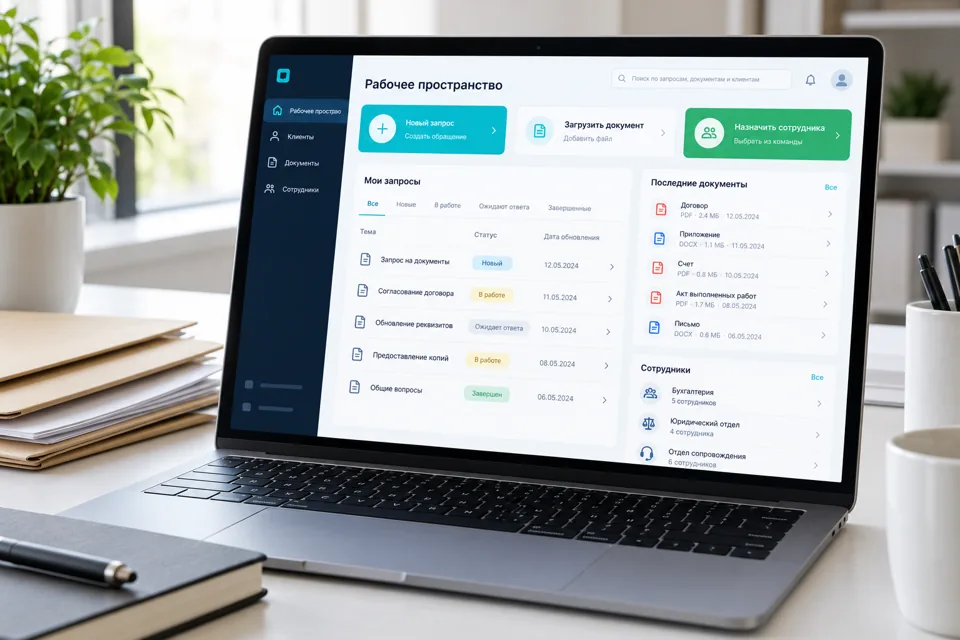
 Illustrative image
Model delivery through closure
Identify the serviced object: equipment, location, contract or software. A request needs category, contact, asset and ownership. Distinguish a new fault from clarification or reopening. Sales may remain in CRM while accepted service work moves to its own operational scope.
Define queues and deadlines
Agree stages such as received, clarification, assigned, active, waiting and completed. Response timers need a start event, working calendar and pause conditions. Software reflects contractual or internal SLA rules; configuring a timer does not itself guarantee attendance within a fixed period.
Link assets and work
Asset records can hold models, serial numbers, locations and maintenance history. Staff receive work instructions, materials and completion evidence. Agree spare-part posting rules. Field users need compact mobile views; offline storage and conflict resolution require explicit design.
Control evidence and access
Restrict client details, photographs and staff notes. Separate internal comments from customer-visible messages. Record assignments and closure reasons without unnecessary personal-data accumulation. Confirm acceptance-document and signature requirements for the actual process, and assign data ownership across CRM integrations.
Pilot with real operational roles
Test reception, dispatch, execution and supervision. Migrate necessary assets and open requests with identifier mapping. Assign notification-failure handling and a manual recovery route. Training includes customer refusal, missing parts and returned work, while reporting distinguishes waiting from execution.
Accept a full service cycle
Exercise a request through work, evidence, closure and future maintenance where applicable. Test reassignment, permissions, attachments and reopening. Handover includes dispatcher and administrator instructions before adding more acquisition channels.
- Requests link to clients and assets.
- Timer calendars and pauses are agreed.
- Internal notes remain private.
- Reassignment preserves work history.
Project questions
Can field technicians use a phone?
Yes, assigned jobs, photos and status updates can be mobile-friendly. Offline operation requires a separate storage and synchronisation model.
What counts as an SLA breach?
Contract or policy defines the starting event, calendar, response and allowed pauses. The system calculates those rules rather than deciding them.
Must this replace CRM?
No. Simple service may fit an existing tool. A distinct scope is useful when assets, work and parts differ substantially from sales management.